SHOULDER PAIN RELIEF IN DAYTON, OH
Knee Pain That Keeps Coming Back? Let’s Fix What’s Actually Causing It
If your knee has been bothering you, you’ve probably already tried to work around it or fix it with:
Rest
Stopping certain exercises
Modified how you squat or run
Told yourself “It’s not that bad”
For a while, that may have even helped!
Then it came back.
That’s the frustrating part, and I know it personally because this was exactly what I went through too. Now this is our specialty.
The goal isn’t to just calm your knee down, it's to guide out why it keeps popping back up again in the first place…then fix it…for good!
What knee pain feels like (for most people)
Knee pain doesn’t usually start as something major (again this is experience).
It tends to show up as:
Pain going up or down stairs
Discomfort during or after squats, lunges, or workouts
Stiffness after sitting for a while
A knee that just doesn’t feel as stable as it used to
Something that’s “annoying,” but not bad enough to stop everything
It’s not a big deal. It doesn’t STOP you from doing anything - and that’s why most people wait.
Then eventually, that small issue starts to limit you more and more.
Why your knee hurts (and why its probably not just your knee)
This is the part most people never hear. Knee pain typically isn’t just knee pain.
Your knee is stuck in the middle. If your hip or ankle has an underlying problem, the knee typically takes over.
Since your knee is typically a very strong joint (it mostly only bends and straightens, while the joints around it have much more motion), it typically takes the force from other joints and becomes overloaded.
Basically - when something else isn’t doing its job, your knee picks up the extra load.
We commonly see knee pain coming from:
Hips that aren’t strong enough or aren’t activating well
Poor control when you bend, step, or change direction
Limited ankle mobility that shifts stress to the knee
subtle imbalances side-to-side that build over time
Even though you feel it in your knee, the cause is often somewhere else.
That’s why icing it or resting it only goes so far.
Why you knee pain comes back
How we help

Most people follow a pretty similar pattern:
First - you back off for a bit
Second - it starts to feel better →
Next - you go back to normal →
Lastly - pain comes back
That cycle can go on for months… sometimes years 🙋♂️ (yep that was me before I knew what to do)
So why doesn’t it get better?
Nothing about how your body is moving has actually changed.
The same stress goes right back into the same spot.
Until that changes, the knee keeps getting stressed.
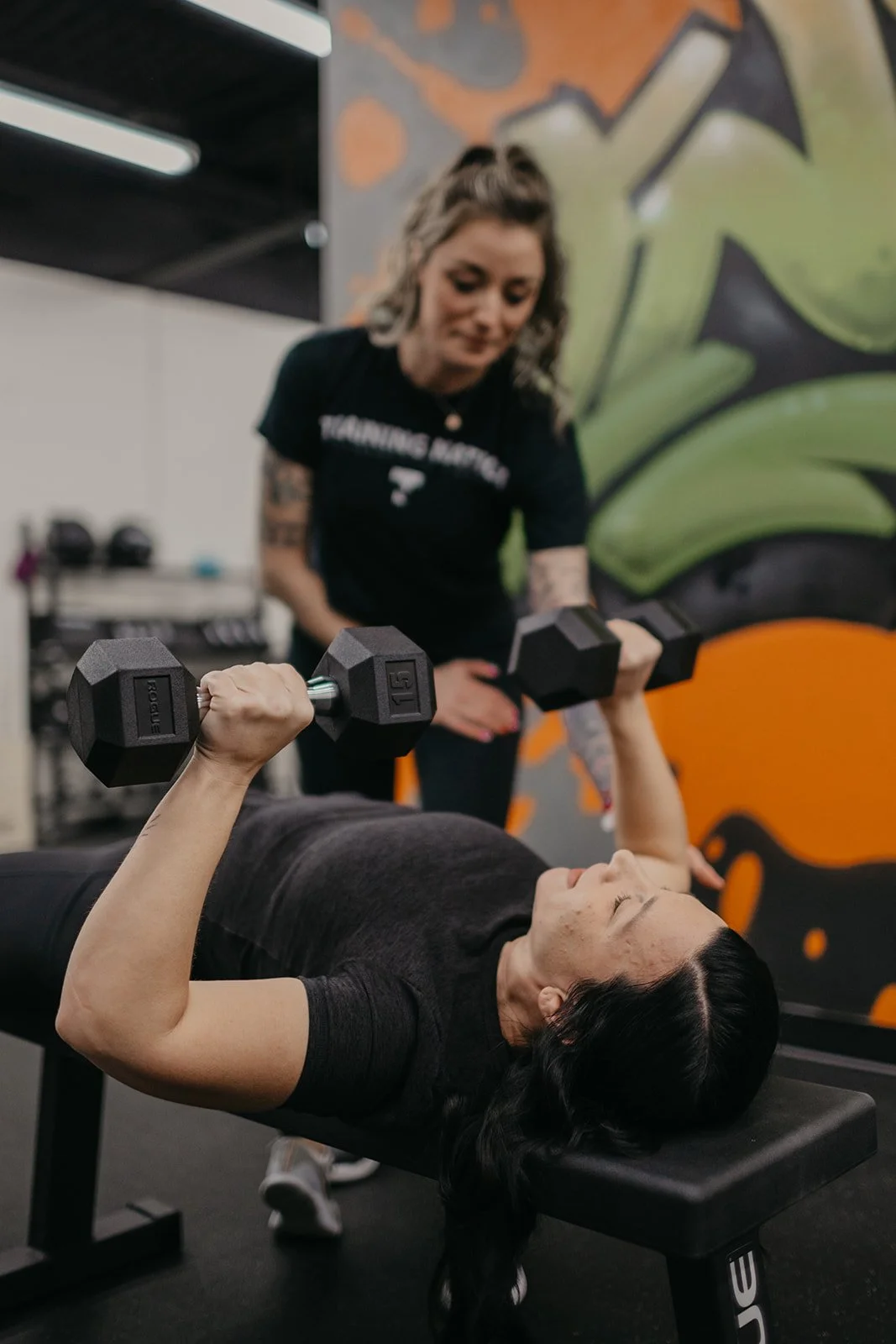
We don’t start with exercises. We start with how you move.
During your first visit, we’re looking at things like:
How you squat, step, and load your leg
How your hips and ankles are contributing
Where you’re compensating without realizing it
Where you’re lacking control or strength
From there, we build a plan that is specific for you!
That usually includes:
cleaning up movement patterns so your knee isn’t taking unnecessary stress
building strength in the areas that actually support your knee
improving stability so things feel solid again
guiding you back into workouts or activity without guessing
The goal is simple:
You stop thinking about your knee every time you move.
Shoulder Questions People Often Ask
When should I stop “resting” or waiting?
If your shoulder:
has been bothering you for a few weeks
keeps coming back
is starting to change how you move
It’s worth getting it looked at now instead of later so it doesn’t become an even bigger issue.
Why does it hurt during my workouts but not after?
Usually your movement form under load is off, or the volume you are doing is more than your body can tolerate at this time.
Your body can compensate for a while, until it can’t. Sometimes adrenaline can take over too. A boxer typically doesnt have pain during the fight, but the day after…oh it’s felt.
Do I need to stop lifting?
NO! PLEASE keep training.
We can usually adjust things so you keep moving safely. Worst case scenario, you hold off on a specific movement or pattern, while you keep training everything else in the meantime. (ex. no shoulder workout right after a surgery, but your legs, core, and other arm can still train.
What to do next
If your shoulder has been “almost fine” for too long, I’d suggest you take the next step. We get to help people just like you everyday except Sundays.
If you’re an active adult in Dayton, Ohio, click the button below for a free 15 minute consult with us to see if you’re a good fit for us, and honestly, if we’re a good fit for you too.
The goal of the call is to point you in the right direction so you get the best opportunity to get back to all the things you love to do.