5 Simple Tips to Run Better (and Stay Out of Pain)
Most running injuries in Dayton, Ohio don't come from running itself. They come from how fast someone jumps back into it after time off, a long season, high volume, or a busy stretch of life. The fix isn't running less. It's easing back in the right way, building strength alongside your mileage, and paying attention to your body's early warning signs before they turn into real problems.
If you're like most runners around here, you've probably had a run that felt great... until it didn't.
Here's what we see with runners in the clinic every week:
- Knees that flare up out of nowhere
- Calves that stay tight no matter how much you stretch
- An Achilles tendon that gets angrier by the week
- Old back problems that creep back in
The problem usually isn't the running. It's how quickly we jump back into it.
Let's fix that!
Here are 5 simple tips to help you prepare for returning to running, whether you're coming back from a break or just trying to stay ahead of an injury this fall season.
Tip 1: How Do I Ease Back Into Running Without Getting Hurt?
Your lungs might be ready to run again long before your tissues are. That mismatch is where a lot of runners have some issues. Their cardio feels fine, so they assume everything else is too.
Here's your starting point:
- Start with shorter runs or run/walk intervals
- Build your weekly mileage gradually, no more than 10% - 20% per week
- Give your body time to adapt to the impact of running again, not just the effort of it
Tip 2: Why Does Strength Training Matter So Much for Runners?
Once your mileage starts climbing, your body needs the strength to handle it. Running is repetitive, the same muscles absorb the same forces, thousands of times per run. Strength training balances that out and helps your body become more resilient to the load.
If you've ever worked with me, you've probably heard me say it: "I've yet to come across anyone who said, 'You know, Luke, if I was just a little bit WEAKER, I think my issues would go away. :) '"
Here's what to focus on:
- Glute strength, because hip stability means less knee pain
- Calf strength, which absorbs your body's shock
- Core strength, which controls how efficiently you move
2-3 days a week of strength work can make a big difference in how your body holds up to running.
Tip 3: What's the Best Warm-Up Before a Run?
Now that you're asking more of your body, how you start your run matters more too!
Cold starts lead to a higher injury risk. It just is what it is.
Try this quick warm-up flow before your next run:
- Leg swings
- Walking lunges
- Calf raises
- Light skipping or pogo jumps
5 minutes of warming up can mean the difference between a good run and a painful one.
Tip 4: What Warning Signs Should Runners Pay Attention To?
Even with a good plan, your body will give you feedback along the way. The key is to not completely ignore it. Most running injuries don't come out of nowhere, they start as small warning signs, like:
- Tightness that sticks around longer than it should
- Pain that shows up at the start of a run
- One side of your body working harder than the other
That's your window to fix the problem before it becomes a bigger issue/injury.
Tip 5: How Can a Running Assessment Help Me Run Without Pain?
This is where things get really interesting. It's not just how much you run, it's how your body handles the load of running too.
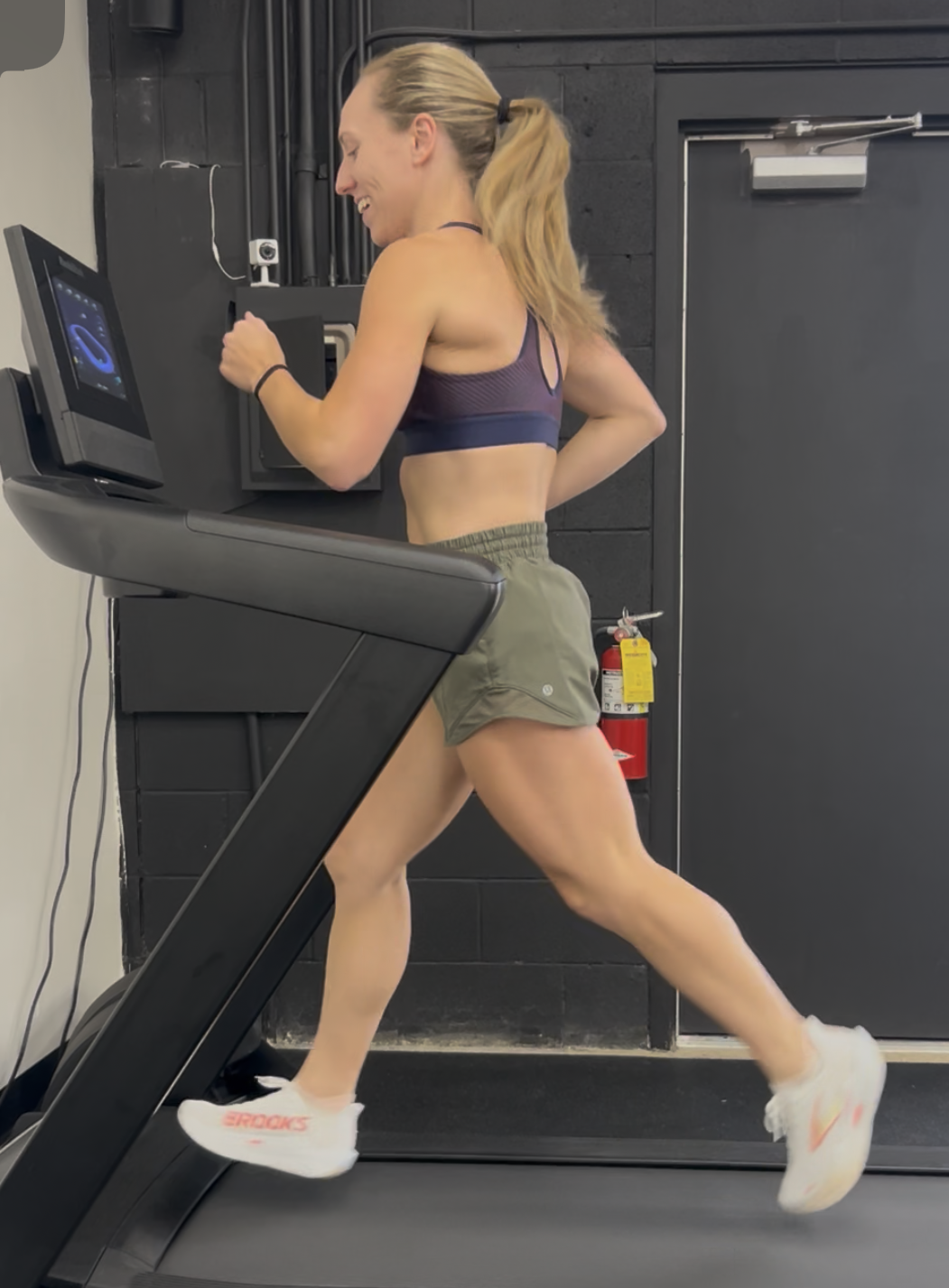
That's why we're excited to introduce something new in the clinic: a 3D running assessment.
Using this system, we can now look at:
- The impact forces your body absorbs with each step
- Asymmetries between your right and left sides
- How efficient your running actually is
- The load moving through your body
Why this matters for you: up until now, most runners have had to guess when it comes to form and training. Now we can be specific!
Instead of saying "your knee pain is likely from overuse," we can say "you're loading your right leg 18 percent more than your left" or "when your foot hits the ground, your forces are higher than your body can currently handle."
From there, we can build you a clear, specific plan to fix it, not just identify why something hurts, but build a smarter return-to-run or rehab plan, improve your running efficiency so you run faster with less effort, and reduce your injury risk long term! Pretty awseom.
Whether you're training for a race, coming back after an injury, or just want to feel better on your runs, this is a real game changer for how we help Dayton runners train smarter.
Frequently Asked Questions About Running and Injury Prevention
How long does it take to fix a running-related injury?
It depends on the injury and how long it's been going on, but many runners notice real progress within a few weeks of addressing the actual cause, not just the symptom. A proper assessment is what gives us a better idea for your specific situation.
Can I keep running while I'm treating an injury?
That's always the goal, yes! Most of the time we can modify your training, mileage, and terrain rather than telling you to stop running completely. The right plan depends on what's going on and how your body is responding.
What is a 3D running assessment, and do I need one if I'm not injured?
It's a movement sensor that measures impact forces, left-right asymmetries, and stride efficiency while you run. It's just as useful for runners who want to improve performance or catch small issues before they become bigger ones.
Do you see runners from Beavercreek?
Yep! We work with runners throughout Beavercreek and the surrounding Dayton, Ohio area, including plenty of people training on the Creekside Trail and the local running routes around the Greene.
Do I need a referral to be seen?
Nope!
Let's Keep You Running Strong This Season
At the end of the day, running should feel freeing, not frustrating. If you're dealing with aches, pains, or just feel like something is "off," don't wait until it sidelines you completely.
We're here to help you feel, move, and perform better so you can keep doing the things you love with the people you love. If you're a runner in the Dayton, Ohio area and want to run without pain, improve your performance, or see exactly how your body is handling the demands of running, click below and we'll set up a completely free 15-minute consultation with one of our docs to learn more about how we can help.
Schedule your free 15-minute consultation
Based in Centerville, serving the Dayton, Ohio area including Centerville, Oakwood, Beavercreek, Springboro, Washington Township, and Bellbrook.
Written by Dr. Luke, PT, DPT, OCS, CSCS, TRS-C, PRA-C, PTI Level 1 Certified